SAFOZi

NODE.JS HA

NODE.JS HA

Simplify your code deployment and the scalability of your environment.

Node.js is a platform used for developing and running client-server applications in JavaScript. “Thanks to the Jelastic Node.js stack model, configuring a Node.js server has become much simpler.”

Bandwidth Protection

99.90% Uptime SLA
Data center: EODC, Enfidha

GlassFish 3 HA

GlassFish hosting starting at

9 TND excl. tax / month

Benefits

• No manual installation of package managers (npm, yarn) or process managers

• Good scalability

• Large community

• Simplified testing and implementation

• High speed, thanks to the use of version 8 of the engine developed by Google

• Update, scale, restart, and stop nodes directly via the Jelastic GUI

• Create your environment with a single click

• Deployment automation

• Automated Let’s Encrypt or custom SSL installation

MYSQL HA

MYSQL HA

Simplify your code deployment and scale your environment

Set up an environment in seconds

Choose your application layer, define scaling limits, and assign it a name. In just a few seconds, your Java, PHP, Ruby, Node.js, or Python environment is ready to run in the cloud with SAS storage!

No installation or configuration

MySQL hosting automatically installs, configures, and connects your server instances with the selected application layer. With HA hosting, simply transfer your MySQL application and you’re ready to go.

No coding for the API

No need to code for our API. Simply transfer your application to our
cloud hosting platform and choose your application layer.

Bandwidth Protection

99.90% Uptime SLA
Data center: EODC, Enfidha

Mysql HA

Hosting WEB SERVER & MYSQL HA Starting from

9 DT excl. tax / month

Deploy your applications on a PaaS hosted
in a Tunisian data center certified to ISO
27001 and PCI DSS standards.

Deploy your solutions on a PaaS
compliant with Tunisian laws and achieve
savings of 40–50% compared to
AWS and Microsoft Azure.

FAQ

What is MySQL and why is it used?

MySQL is a database management system.
It can handle anything from a simple shopping list to a photo gallery or the vast amounts of information found in a corporate network. To add, access, and process data stored in a computer database, you need a database management system such as MySQL Server.

MySQL is a relational database management system (RDBMS) developed by Oracle and based on Structured Query Language (SQL). A database is a structured collection of data. It can be anything from a simple shopping list or a photo gallery to a repository for the vast amounts of information found in a corporate network.

Nexus Repository

Nexus Repository

Build Faster and Deliver Reliably. Publish and cache components in a centralized repository.

What is Nexus Repository?

Nexus is a repository management platform used to host and manage artifacts.
These artifacts are components generated during the build process and are typically uploaded using tools like Maven.

Nexus enables teams to share and reuse components efficiently across development environments.

Benefits of Nexus Repository

  • Remote Repository Proxy & Caching. Caches artifacts from remote repositories to save bandwidth and reduce download time.
  • Centralized Deployment Management. Organize and control where specific Maven project deployments occur.
  • Stability & Reliability. Ensures builds continue to run even without internet connectivity by using a local repository.

SonarQube

SonarQube

Code Quality, Security & Static Analysis Platform

What is SonarQube?

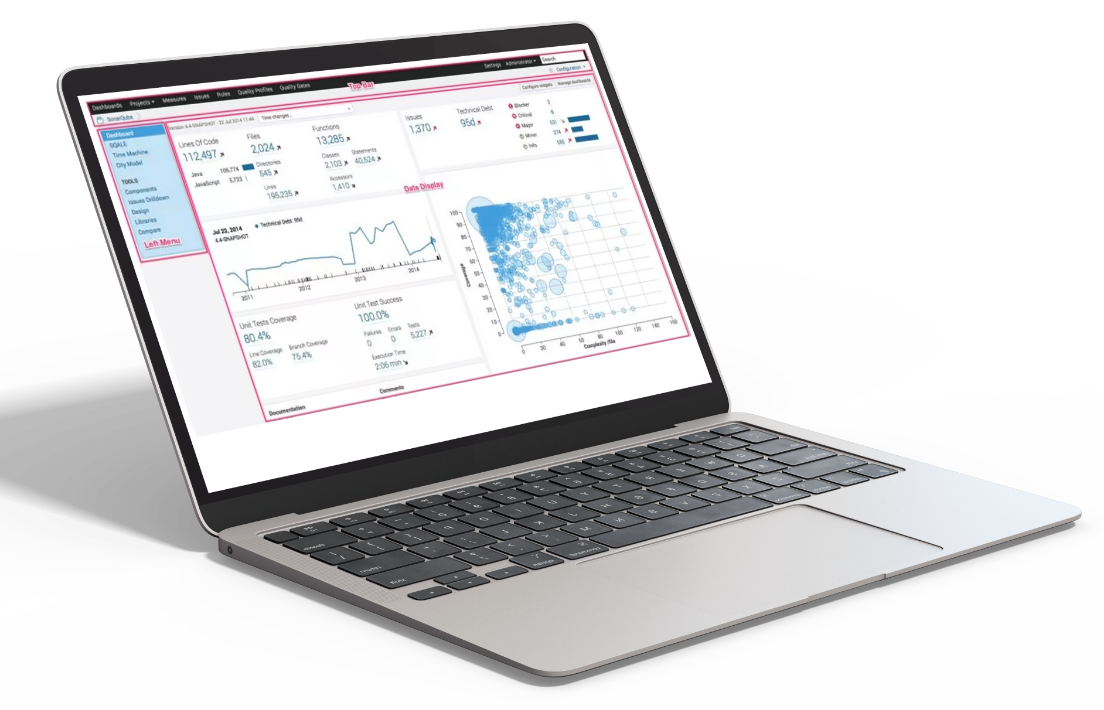
SonarQube is an open-source code quality and security tool that analyzes source code during development.
It detects bugs, security vulnerabilities, duplicated code, and other issues.

Its goal is to help teams produce higher-quality code while simplifying the development process.
By using static analysis, SonarQube enables teams especially in Agile and DevOps environments to identify and fix issues early in the development lifecycle before deployment.


SonarQube Reports

After analyzing your source code, SonarQube generates several types of reports:

  • Architecture & Design Analysis
  • Unit Testing Insights
  • Duplicated Code Detection
  • Potential Bugs Identification
  • Code Complexity Analysis
  • Coding Standards Compliance
  • Comments & Documentation Review

Benefits of SonarQube :

Jira

Jira

Professional Project Management Solution

What is Jira?

Jira Software can be configured for any type of project.
Teams can start with predefined templates or create custom workflows.

Jira issues (also called tasks) track each piece of work as it moves through the workflow until completion.
Customizable permissions allow administrators to control who can view and perform specific actions.

With all project data centralized, Jira enables teams to generate reports to track progress and productivity.

Benefits of Jira :

  • Intuitive Dashboard Interface. Provides a clear and global overview of your projects.
  • Advanced User Management. Easily manage users and permissions.
  • Quick Issue Visibility. Get instant access to all created tickets.
  • Bug Tracking & Task Prioritization. Convert tasks into bugs and prioritize work efficiently.
  • Real-Time Reporting. Monitor progress and performance with live reports.

Jenkins

Jenkins

Reliable Open-Source Automation Server

What is Jenkins?

Jenkins is an open-source continuous integration (CI) tool developed in Java.
It allows developers to test code changes and receive real-time feedback on large codebases.

By automating testing and integration, Jenkins helps developers quickly identify and fix issues, making software development faster and more efficient.

Benefits of Jenkins :

  • Open-Source and Easy to Use. Supports building, automation, and deployment across multiple platforms (Windows, Linux, macOS).
  • Extensive Plugin Ecosystem. Over 1000 plugins available, with the ability to create and share custom plugins.
  • Cross-Platform Compatibility. Developed in Java, making it portable across major operating systems.
  • Full CI/CD Automation. Automates integration processes, reducing manual effort and saving time and costs throughout the development lifecycle.

Grafana

Grafana

The Open Observability Platform

What is Grafana?

Grafana is an open-source interactive data visualization platform developed by Grafana Labs.
It allows users to visualize data through graphs and dashboards for better interpretation and understanding.

Benefits of Grafana :


  • Real-Time Monitoring : Visualize live metrics to track application, infrastructure, and network performance.
  • Multi-Source Data Analysis : Connect and analyze data from various sources to identify trends and anomalies.
  • Customizable Dashboards : Create flexible and interactive dashboards for clear data representation.
  • Team Collaboration : Share dashboards and insights across teams for better decision-making.
  • Troubleshooting & Debugging : Quickly identify issues by analyzing relevant metrics and logs.


GitLab

Gitlab

The DevOps solution to build, secure, and run software

What is GitLab?

GitLab is a collaborative development platform that provides a web-based service and a version control system based on Git.
It offers a centralized space for code storage, issue tracking, and project management.

A repository can host multiple branches and versions, allowing users to review previous code and roll back when needed.

Benefits of Gitlab :

  • Free and Unlimited Service
  • Open-Source License
  • Self-Hosting Available on Any Plan
  • Seamless Git Integration
  • User-Friendly and Intuitive Interface
  • Kubernetes-Based Deployment

Ansible

Ansible

Professional Project Automation

What is Ansible?

Ansible is an IT automation engine used to automate provisioning, configuration management, application deployment, and orchestration.

It connects to nodes and sends small programs called modules, which execute automation tasks.
These modules define the desired state of a system.

Ansible runs the modules and then removes them, eliminating the need for complex scripts and manual commands.

DRUPAL HA

DRUPAL HA

Simplify your code deployment and scale your environment

Drupal is a free software that allows you to publish, manage, and organize a wide variety of content on a website.

Drupal sur SAFOZi PaaS

Bandwidth Protection

99.90% Uptime SLA
Data center: EODC, Enfidha

DRUPAL HA

Hosting DRUPAL HA Starting from

9 DT excl. tax / month

Benefits

  • Highly Secure CMS
  • Easy eCommerce Website Creation
  • High Flexibility (e.g., multilingual websites)

Deploy your applications on a PaaS hosted
in a Tunisian data center certified to ISO
27001 and PCI DSS standards.

Deploy your solutions on a PaaS
compliant with Tunisian laws and achieve
savings of 40–50% compared to
AWS and Microsoft Azure.

FAQ

What is Drupal used for?

Drupal is a content management system (CMS) that provides the tools needed to structure and manage content.
It also allows you to build flexible content workflows and dynamic features around your content.

Drupal is a free and open-source content management framework that can be adapted and customized for both simple websites and complex web applications.

Yes. Drupal is a flexible CMS built on the LAMP stack.
It features a modular architecture that allows you to add or remove functionality through modules and customize the look and feel of your website using themes.

Yes. Both Drupal and WordPress are popular content management systems (CMS) used to build websites.
However, they differ in complexity and flexibility .Drupal is more advanced and customizable, while WordPress is easier to use.

Drupal primarily serves as a back-end system.
Front-end frameworks can interact with it through APIs to access and display data.